
How to Measure AI Adoption Beyond Logins and Licenses
By Erin Harris, AI Strategy & Business Transformation Consultant
A business can have strong AI login numbers without seeing meaningful operational improvement. A license tells you that access exists. A usage report tells you that activity occurred. Neither tells you whether the full workflow became faster, more accurate or easier for employees and customers.
A November 4, 2026 Lam Research posting for Enterprise AI Experience & Adoption Lead provides a useful organizational example. The employer connects AI platform operations, governance, change management, user engagement and feedback loops. It describes standards for access, data handling, observability and responsible use, alongside adoption plans and executive metrics. These are advertised responsibilities, not evidence of internal problems or results.
The practical question for smaller companies is how to build a measurement system without building a new department.
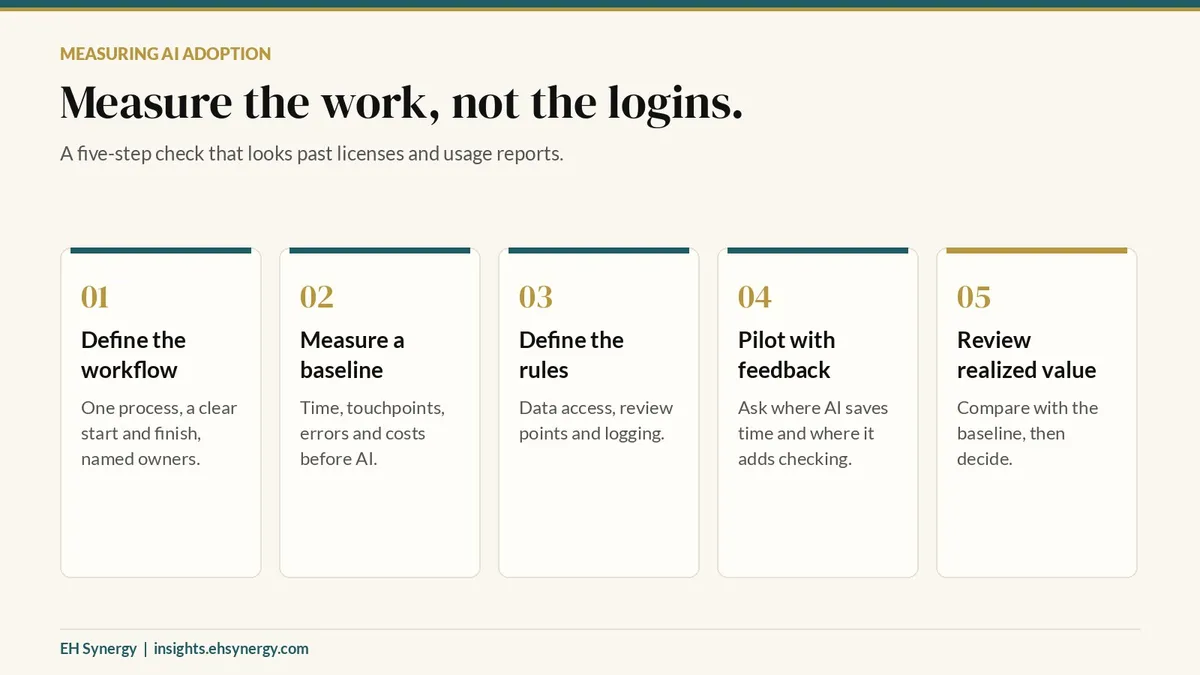
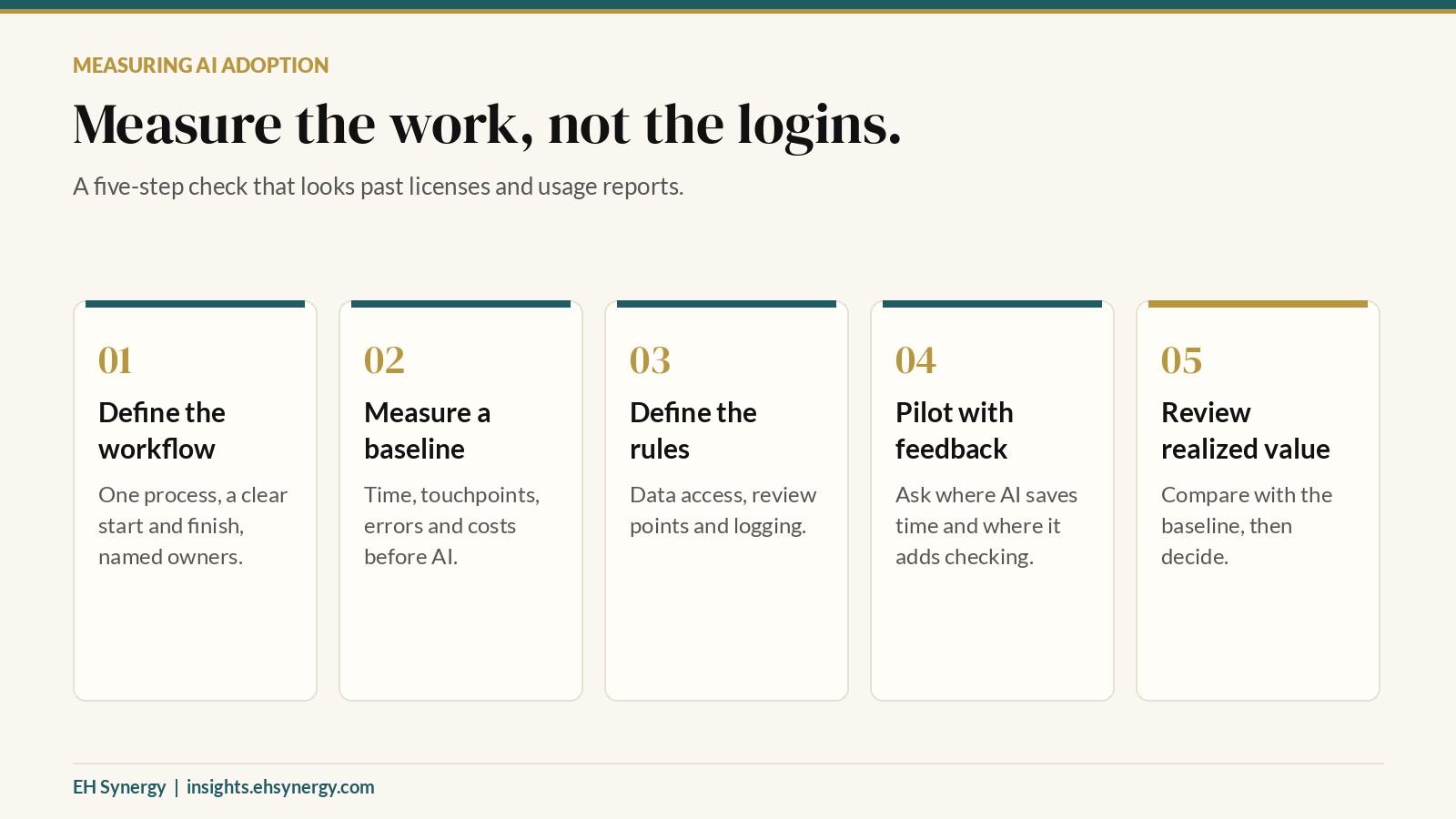
1. Define the Workflow, Not the Tool
Choose one process with a clear start and finish. For a local property-management team, that might be a maintenance request from intake through assignment, resident update and resolution. Record who owns each handoff and what an acceptable outcome looks like. This is an illustrative workflow, not a reported client implementation.
2. Measure a Baseline
Before adding AI, sample representative requests. Record time to completion, staff touchpoints, errors, customer follow-ups, escalation frequency and direct labor or vendor costs. Separate urgent exceptions from routine work so averages do not hide the hard cases.
3. Define the Rules
Specify what data an AI system can access, which actions require human review, what is logged, and who handles a failed or uncertain result. In property operations, a draft resident message might be appropriate for review, while authorizing an expensive repair may need explicit approval. Governance is part of workflow design, not paperwork added at the end.
4. Pilot With Feedback
Give employees a narrow use case, a short demonstration and a way to report problems. Ask where the AI saves time and where it adds checking, confusion or duplicate entry. Do not treat a low login count as proof of resistance. It may indicate poor fit, unclear permissions or a tool that does not solve the intended problem.
5. Review Realized Value
Compare the pilot with the baseline using a consistent sample. A simple estimate is: net monthly benefit = valued labor time genuinely released + avoided error costs + measurable incremental value, minus software fees, setup, training, monitoring and correction costs. Do not assume every minute saved becomes a cash saving. Document the assumptions and review the result with the workflow owner.
Decision Rights Matter
Name three responsibilities even if one person holds multiple roles: a process owner who defines success, a technical owner who manages access and reliability, and a reviewer who can approve changes or stop the pilot. Add a review date and a clear decision: continue, modify, expand or retire.
What to Do This Week
Pick one existing AI-assisted workflow. Ask its owner to demonstrate the process from beginning to end, including corrections. If the only success metric is how often people open the tool, add one quality metric and one end-to-end business outcome before expanding the rollout.
Lam Research's listing is one employer's description of a role, not proof of a broad market trend. The transferable lesson is to measure the work people complete, not simply the software they use.
Primary source: https://opportunities.lamresearch.com/job/Fremont-Enterprise-AI-Experience-%26-Adoption-Lead-CA-94538/1399581500/